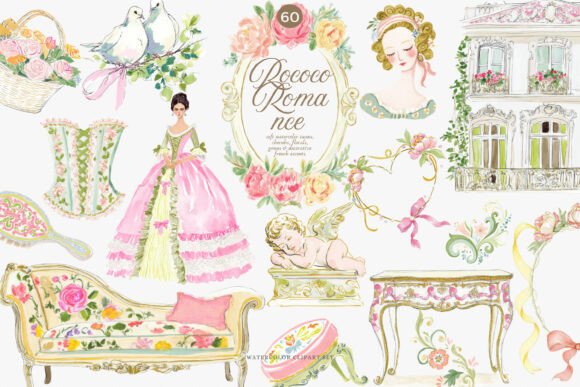
Watercolor Rococo Coquette Clipart Set: A Designer's Guide
There's a particular challenge in design work that calls for romance without looking saccharine, for vintage charm without feeling dated. You know the projects—wedding invitations that need to whisper rather than shout, boutique branding that should feel curated rather than mass-produced, or editorial layouts where every visual element needs to carry emotional weight. The Watercolor Rococo Coquette Clipart Set occupies this exact creative space, offering a collection that bridges historical ornamentation with contemporary feminine aesthetics.
Understanding the Visual Language
Rococo design, at its core, favors asymmetry, curved forms, and elaborate decoration. What makes this particular collection distinctive is how it filters those 18th-century sensibilities through a watercolor medium. The hand-painted quality gives each element—whether it's a cherub, a swan, or a cascading floral arrangement—a sense of imperfection that digital illustration often lacks. You'll notice the pastel palette leans toward dusty pinks, muted lavenders, and warm creams rather than saturated jewel tones. This restraint is what keeps the set feeling modern despite its historical references.
The coquette aesthetic brings another layer. Think of the delicate bows, the soft gowns, the ornate mirrors and furniture pieces. These aren't just decorative flourishes—they're storytelling devices. A vintage mirror clipart placed on a product label suggests reflection, self-care, perhaps a touch of vanity in the most charming sense. The florals throughout the set carry that same narrative weight, evoking French gardens and romantic afternoons without requiring a single word of copy.
Where This Collection Truly Shines
Let me walk through practical applications where I've seen this style of design asset make a genuine difference.
Stationery and Invitations: This is the obvious starting point, but it's worth specifying why. Wedding suites, baby shower invitations, tea party announcements—these projects live or die on their ability to establish mood immediately. The Watercolor Rococo Coquette Clipart Set provides ready-made border elements and decorative frames that eliminate hours of composition work. You're not building from scratch; you're arranging and customizing.
Packaging Design for Small Brands: If you're developing packaging for artisan products—think handmade soaps, candles, confections, or beauty products—these illustrations communicate craftsmanship and care. A pastel frame surrounding your product name, a small cherub accent near the ingredient list, florals wrapping around a box flap. These details tell customers that someone thought about their experience.
Brand Identity Work: For businesses positioning themselves in the feminine, romantic, or luxury-adjacent market, elements from this set can inform logo design, social media graphics, and marketing collateral. The key here is restraint. Pull two or three elements that become your signature—a specific floral arrangement, a border style, a particular swan illustration—and use them consistently. That's how design assets build brand recognition rather than visual noise.
Editorial and Publishing: Blog headers, magazine layouts, book covers in the romance or women's fiction category, recipe cards for food bloggers—these all benefit from decorative elements that add warmth and personality. The transparent PNG format at 300 DPI means these illustrations hold up in both digital and print contexts, which matters when your content lives across multiple platforms.
Working With the Set: Practical Considerations
With 61 illustrations at approximately 9" x 8" and smaller, you're getting substantial variety. But variety only helps if you approach it strategically. Here's how I'd recommend evaluating and implementing this collection:
Start With Your Color Palette. The set works in pastels, so your surrounding design should either complement or intentionally contrast that softness. Pairing these illustrations with deep navy or forest green typography, for example, creates visual tension that feels sophisticated. Going all-pastel works too, but you'll need to ensure enough tonal variation so nothing disappears into the background.
Consider Your Typography Carefully. This is where font pairing becomes critical. These illustrations have a distinct personality—they're ornate, curved, and decorative. Pairing them with an equally ornate script font risks visual competition. Instead, consider a clean serif font for body text and reserve a display font or script font for headlines only. The illustrations already provide the decorative layer; your typography should provide structure and readability.
Test Across Contexts. Before committing to these elements in your brand identity or major project, mock them up at actual size. Place a border element around a business card template. Drop a floral arrangement into an Instagram post layout. Check how the watercolor textures render on different screens and in print proofs. What looks delicate on a high-resolution monitor might lose definition at smaller sizes, so identify your minimum viable scale for each element.
Mind the Licensing. If you're using these for client work or commercial projects, verify the license terms before incorporating them into deliverables. Most premium clipart sets allow commercial use, but specifics around print runs, digital product resale, and attribution vary. Understanding this upfront prevents headaches later.
Building Visual Harmony
The real skill with any design asset collection isn't knowing where to place individual elements—it's understanding how they work together to create cohesion. The Watercolor Rococo Coquette Clipart Set gives you gowns, florals, swans, cherubs, furniture, mirrors, borders, and decorative elements. That's a full visual ecosystem.
My suggestion: create a style guide specific to this collection before you start designing. Identify your primary elements (maybe three to five you'll use most frequently), secondary elements for occasional accents, and tertiary elements for special occasions only. This hierarchy prevents the temptation to use everything at once, which is the fastest route to cluttered, amateur-looking design.
The 300 DPI resolution and transparent backgrounds make layering straightforward, but thoughtful composition still matters. Leave breathing room. Let a single swan illustration anchor a design rather than surrounding it with every available flourish. The rococo tradition understood that negative space makes ornamentation feel intentional rather than accidental.
Whether you're a designer building client projects, an entrepreneur developing product packaging, or a crafter creating something personal, this collection offers a cohesive visual vocabulary. The work isn't just having beautiful assets—it's deploying them with purpose.